دژنکتور

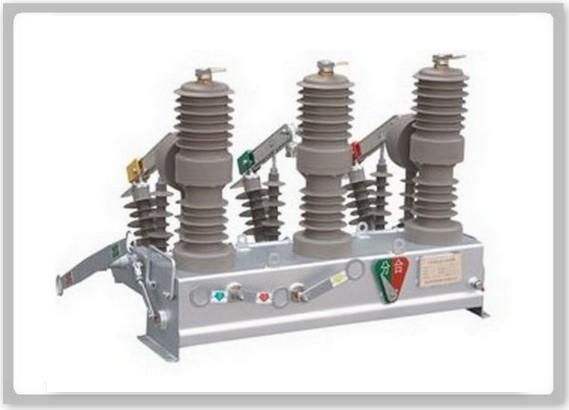
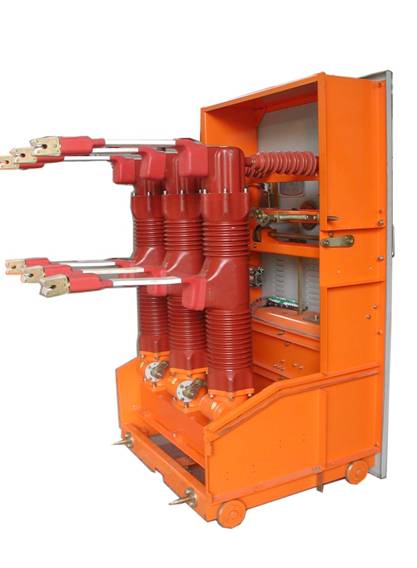
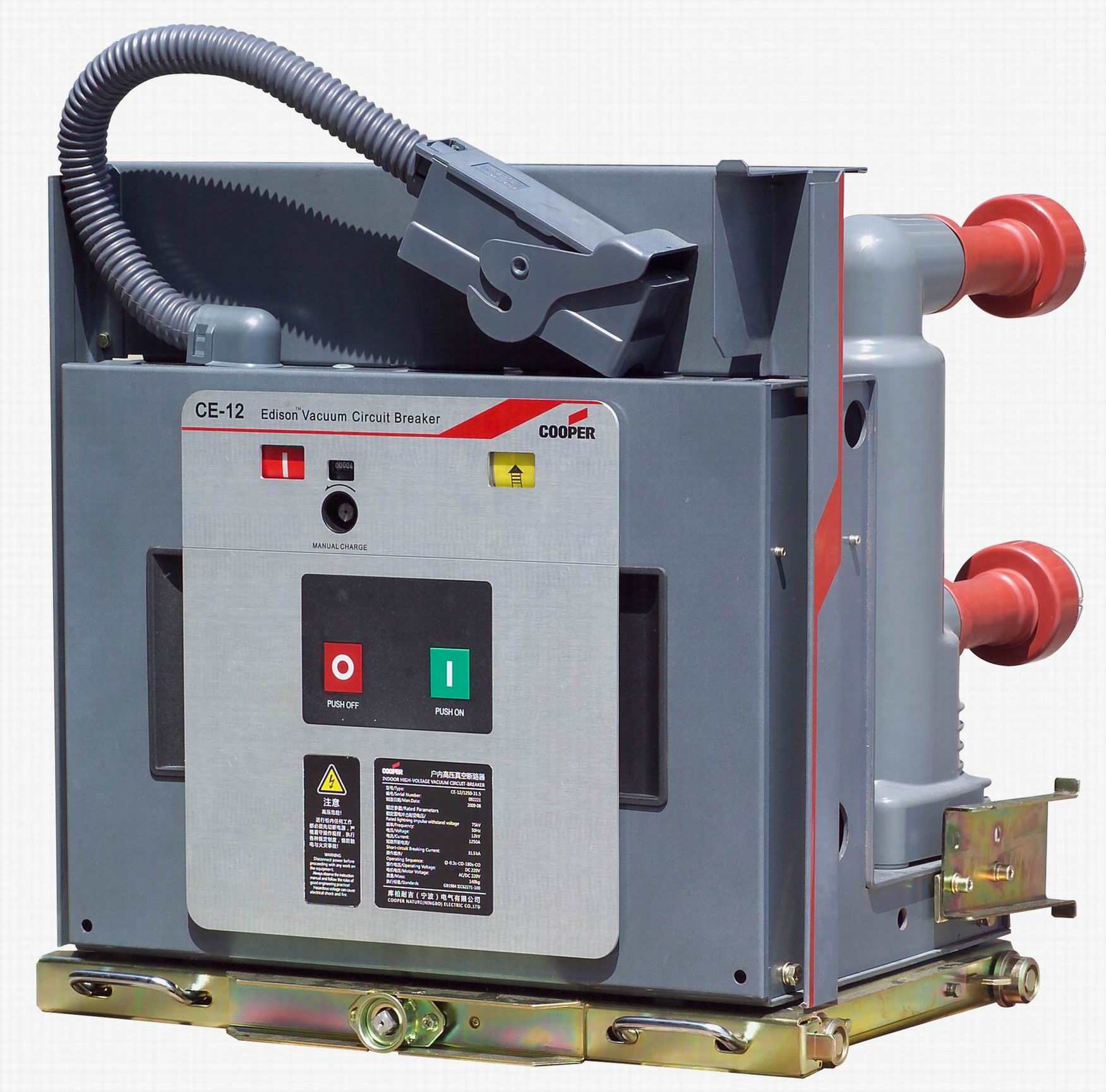
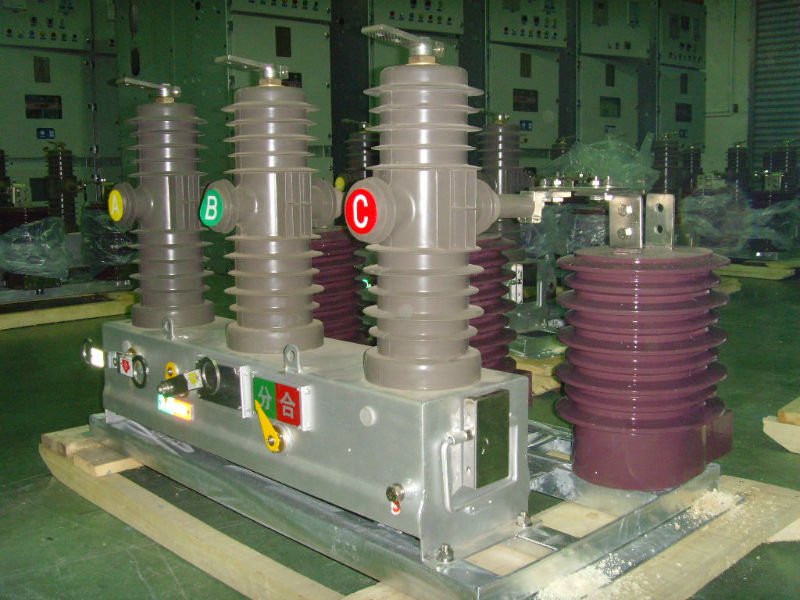
دژنكتور  disjoncteur  نام فرانسوي circuit breaker به معناي قطع كننده مدار است

در فارسي به آن كليد حفاظتي ، بريكر ، كليد فشار شكن گفته مي شود.

اصطلاحا دژنكتور براي كليدهاي قدرت  high voltage و يا  medium voltage استفاده مي گردد


كلاً بريكر وظايف زير را بعهده دارد:

الف:بطور دائم مي تواند جريان نامي مدار را تحمل كند بدون اينكه حرارت اضافي در آن توليد شود و يا صدمه اي به آن وارد شود.

ب:درحفاظتها زيربار مدار را قطع ويا وصل كند.

ج:جريان نامي مدار را براحتي قطع و وصل نمايد.

د: جريانهاي اتصال كوتاه در حد قدرت نامي خود را قطع و وصل كند.


انواع كليدهاي قدرت:

کلید قدرت هوایی: این کلید ها مدار با دمیدن هوای فشرده با سرعت ما فوق صوت به کنتاکت های باز شده قطع می کنند

کلید قدرت SF6 : این کلید کاملا بسته و با گاز عایق شده در هر کجا که فضا کم با شد مانند پست های اول شهر به کار می رود . این کلید ها از انواع دیگر با قدرت های مشابه خیلی کوچکتر و از کلید های هوایی نیز کم صداتر است

SF6 Medium voltage


SF6 High voltage


کلید قدرت خلا يا وكيوم: این کلید ها با اصول متفاوتلی از دیگر کلید ها کار می کنند ، زیرا هیچ گازی برای یونیزه شدن در موقع باز شدن کنتاکت ها وجود ندارد . این کلیدها کاملا آب بندی می باشند ودر نتیجه ساکت بوده وهیچ گاه در معرض آلودگی هوا قرار نمی گیرند


VCB medium voltage


VCB medium voltage

Electrical Preventive Maintenance of Air Circuit Breakers

Electrical Preventive Maintenance of Air Circuit Breakers

Recommended minimum practice for preventive maintenance Insulationv

Remove and clean interphase barriers. Clean all insulating materials with vacuum and/or clean lint free rags. If it is necessary to use cleaning solvents, use only solvents recommended by the manufacturer.

Inspect for (early) signs of corona, tracking, arcing, or thermal or physical damage.

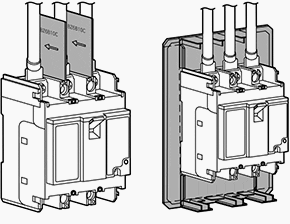
Insulation barriers (left: Interface barrier; right: Earth barrier)

Insulation barriers (left: Interface barrier; right: Earth barrier)


Ensure that insulation is left clean and dry.


Contacts

Ensure that all contacts are clean, smooth, and in proper alignment. Ensure that spring pressures are maintained according to manufacturer’s specifications. On silver contacts, discoloration is not usually harmful unless caused by insulating deposits. Clean silver contacts with alcohol or silver cleaner using non-abrasive cloths.

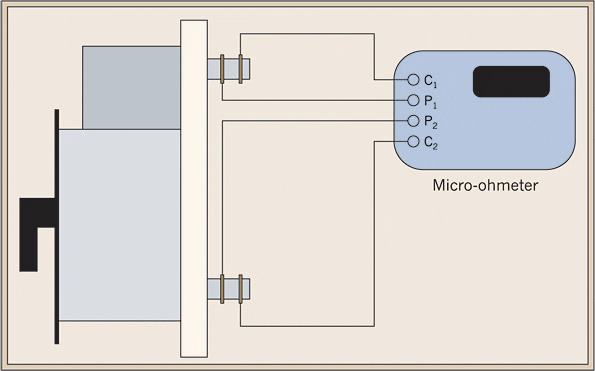
Contact resistance tests using micro-ohmmeter

Contact resistance tests using micro-ohmmeter (photo credit: ecmweb.com)


Manually close breaker to check for proper wipe, contact pressure, contact alignment, and to ensure that all contacts make at approximately the same time.

If possible, a contact resistance test should be performed to determine the quality of the contacts. Micro-ohmmeters, which are used to perform contact resistance tests, apply a DC current through the entire closed circuit breaker current path, including the contacts, pivot point, and stab connections of the circuit breaker. The test set read-out displays the contact resistance directly in micro-ohms.

Older breakers equipped with carbon contactors generally require very little maintenance. Examine for proper pressure, deterioration, or excessive dressing which may interfere with their proper operation.

Draw-out contacts on the circuit breaker and the stationary contacts in the cubicle should be cleaned and inspected for overheating, alignment, and broken or weak springs. Coat contact surfaces with contact lubricant to ease mating (see manufacturer’s recommendations).


Arc Interrupters

Clean all ceramic materials of loose dirt and examine for signs of moisture, make sure the assemblies are clean and dry. Examine for cracked or broken pieces. Dirt and arcing deposits may be removed by light sanding — do not use emery cloth or wire brushes which may leave conductive residue behind. Repair or replace as necessary.

Examine arc chutes for dirt and/or dust accumulations and clean as necessary. Dielectric testing of arc shields may be recommended by the manufacturer. Check air puffer for proper operation.


Operating Mechanism

Inspect for loose, broken, worn, or missing parts (consult manufacturer’s schematics for required parts). Examine for excessive wear of moving parts. Observe that operating mechanisms function properly without binding, hanging, or without delayed action.

Ensure any lubrication is done according to the manufacturer’s specifications.

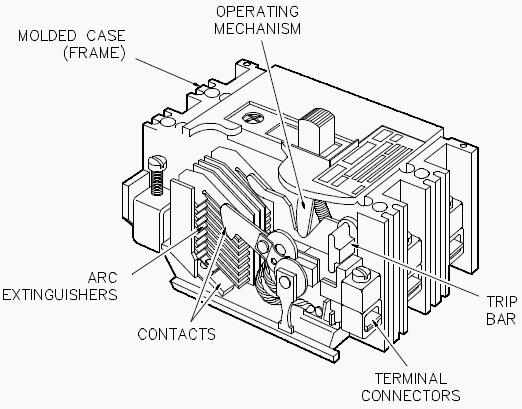
Figure 1 - Cutaway view of the molded case circuit breaker

Figure 1 – Cutaway view of the molded case circuit breaker


Ensure mechanisms are clean, properly lubricated, and all bolts and screws are properly secured. Repair or replace as necessary.


Auxiliary Devices

Inspect operating devices for proper operation and general condition. Ensure all indicating devices are fully functional and properly set.

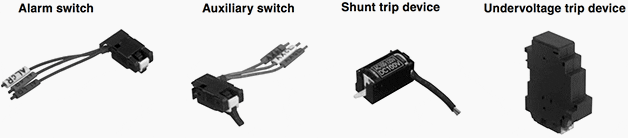
Auxiliary devices (aux. switch, alarm switch, shunt trip and unrevoltage trip device)

Auxiliary devices (aux. switch, alarm switch, shunt trip and unrevoltage trip device)


Protective relays and circuit breaker trip devices should be inspected and tested according to manufacturers’ specifications and applicable industry standards such as those issued by the Institute of Electrical and Electronics Engineers (IEEE) and the National Fire Protection Association (NFPA).


History of Relay

History of Relay

The static relay is the next generation relay after electromechanical type.The Solid Static relays was first introduced in 1960’s. The term ‘static’ implies that the relay has no moving mechanical parts in it.

Compared to the Electromechanical Relay, the Solid Static relay has longer life-span, decreased noise when operates and faster respond speed.

However, it is not as robust as the Electromechanical Relay.

Static relays were manufactured as semiconductor devices which incorporate transistors, ICs, capacitors, small microprocessors etc.

The static relays have been designed to replace almost all the functions which were being achieved earlier by electromechanical relays.


Measuring principles

The working principle of the Solid Static relays is similar to that of the Electromechanical Relay which means the Solid Static relays can perform tasks that the Electromechanical Relay can perform.

The Solid Static relays use analogue electronic devices instead of magnetic coils and mechanical components to create the relay characteristics. The measurement is carried out by static circuits consisting of comparators, level detectors, filter etc while in a conventional electromagnetic relay it is done by comparing operating torque (or force) with restraining torque (or force). The relaying quantity such as voltage/current is rectified and measured.

When the quantity under measurement attains certain well-defined value, the output device is triggered and thereby the circuit breaker trip circuit is energized.

In a solid state relay, the incoming voltage and current waveforms are monitored by analog circuits, not recorded or digitized. The analog values are compared to settings made by the user via potentiometers in the relay, and in some case, taps on transformers.

In some solid state relays, a simple microprocessor does some of the relay logic, but the logic is fixed and simple.

For instance, in some time over current solid state relays, the incoming AC current is first converted into a small signal AC value, and then the AC is fed into a rectifier and filter that converts the AC to a DC value proportionate to the AC waveform. An op-amp and comparator is used to create a DC that rises when a trip point is reached. Then a relatively simple microprocessor does a slow speed A/D conversion of the DC signal, integrates the results to create the time-over current curve response, and trips when the integration rises above a set point.

Though this relay has a microprocessor, it lacks the attributes of a digital/numeric relay, and hence the term “microprocessor relay” is not a clear term.


Function of Relay

Early versions used discrete devices such as transistors and diodes in conjunction with resistors, capacitors, inductors, etc., but advances in electronics enabled the use of linear and digital integrated circuits in later versions for signal processing and implementation of logic functions.

While basic circuits may be common to a number of relays, the packaging was still essentially restricted to a single protection function per case, while complex functions required several cases of hardware suitably interconnected.

Basler Electric BE1-27 Solid State Protective Relay

Basler Electric BE1-27 Solid State Protective Relay, Over/Under Voltage


User programming was restricted to the basic functions of adjustment of relay characteristic curves.

Therefore it can be viewed in simple terms as an analogue electronic replacement for electromechanical relays, with some additional flexibility in settings and some saving in space requirements.

In some cases, relay burden is reduced, making for reduced CT/VT output requirements. In a static relay there is no armature or other moving element and response is developed by electronic, magnetic or other components without mechanical motion.

A relay using combination of both static and electromagnetic units is also called a static relay provided that static units accomplish the response. Additional electromechanical relay units may be employed in output stage as auxiliary relays. A protective system is formed by static relays and electromechanical auxiliary relays.

The performance of static relay is better than electromagnetic relays as they are fast acting and accuracy of measurement is better than electromagnetic relay.

The constraint in static relay is limited function/features.

In the last decade, some microprocessors were introduced in this relay to achieve the functions like:

  1. Fuse failure features
  2. Self check feature
  3. Dead Pole detection and
  4. Carrier aided protection features


Operation of Relay

The essential components of static relays are shown in figure below. The output of CT and PT are not suitable for static components so they are brought down to suitable level by auxiliary CT and PT. Then auxiliary CT output is given to rectifier.

Rectifier rectifies the relaying quantity i.e., the output from a CT or PT or a Transducer.

Solid state relay - Operation

Solid state relay - Operation


The rectified output is supplied to a measuring unit comprising of comparators, level detectors, filters, logic circuits.

The output is actuated when the dynamic input (i.e., the relaying quantity) attains the threshold value. This output of the measuring unit is amplified by amplifier and fed to the output unit device, which is usually an electromagnetic one.

The output unit energizes the trip coil only when relay operates.


 Advantages of Solid State Relay

  • Static Relay burden is less than Electromagnetic type of relays. Hence error is less.
  • Low Weight
  • Required Less Space which results in panel space saving.
  • Arc less switching
  • No acoustical noise.
  • Multi-function integration.
  • Fast response.
  • Long life (High Reliability): more than 109 operations
  • High Range of Setting compared to electromechanical Relay
  • More Accurate compared to electromechanical Relay
  • Low Electromagnetic Interference.
  • Less power consumption.
  • Shock and vibration resistant
  • No contact bounce
  • Microprocessor compatible.
  • Isolation of Voltage

No moving parts: There are no moving parts to wear out or arcing contacts to deteriorate that are often the primary cause of failure with an Electro Mechanical Relay.

No mechanical contact bounce or arcing: A solid-state relay doesn’t depend on mechanical forces or moving contacts for its operation but performs electronically. Thus, timing is very accurate even for currents as low as the pickup value. There is no mechanical contact bounce or arcing, and reset times are extremely short.

Low input signal levels: Ideal for Telecommunication or microprocessor control industries. Solid state relays are fast becoming the better choice in many applications, especially throughout the telecommunication and microprocessor control industries.

Cost Issues: In the past, there has been a rather large gap between the price of an electromechanical relay and the price of a solid state relay. With continual advancement in manufacturing technology, this gap has been reduced dramatically making the advantages of solid state technology accessible to a growing number of design engineers.

Limitations of static relays

  • Auxiliary voltage requirement for Relay Operation.
  • Static relays are sensitive to voltage transients which are caused by operation of breaker and isolator in the primary circuit of CTs and PTs.
  • Serious over voltage is also caused by breaking of control circuit, relay contacts etc. Such voltage spikes of small duration can damage the semiconductor components and also cause mal operation of relays.
  • Temperature dependence of static relays: The characteristics of semiconductor devices are affected by ambient temperature.
  • Highly sophisticated isolation and filter circuits are required to be built into the relay design to take care of electromagnetic interference and transient switching disturbances in the power system.
  • Highly reliable power supply circuits are required.
  • Effect of environmental conditions like humidity, high ambient temperature, dust accumulation on PCB leading to tracking.
  • The component failure.
  • Non availability of fault data.
  • Characteristic variations with passage of time.

References

  • Handbook of Switchgear –Bhel
  • Digital/Numerical Relays -T.S.M. Rao


معرفی سایت

در زمینه برق قدرت :

http://www.gucelektrik.com.tr/

در زمینه موتور های الکتریکی :

http://www.tamgucelektrik.com

در زمینه ابزار برقی :

http://www.petekteknoloji.com.tr

مدار  الکترونیکی :

http://www.devreyapimi.com

تصاویر آزمایشگاه فشار قوی :

http://www.ume.tubitak.gov.tr/yguc2007/umefoto/yuksek_gerilim/yuksek_gerilim.php

خبرگزاری :

http://www.guncelposta.com/index.php

مدارات الکترونیکی :

http://320volt.com/siemens-logo-230-rc-plc-programlanmasi/


پیش فازی و پس فازی


پايداری ميان مدت و بلند مدت

پايداری ميان مدت و بلند مدت
پايداری ميان مدت و پايداری بلند مدت، مربوط به پاسخ سيستم های قدرت به آشفتگی های شديد، است.
آشفتگی های شديد، اغتشاش هايی هستند که به انحراف های فرکانس، ولتاژ و توان های انتقالی منجر می شوند که اين انحراف ها چنان بزرگ يا ماندنی هستند که اقدامات فرايند های کٌند، سيستم های حفاظتی و کنترل هايی را که در مطالعات مرسوم پايداری گذرا مدل نشده اند، بر ميانگيزانند.

روابط ژنراتور سنکرون در شبکه

مثالی برای استفاده از پریونیت

  یک ترانس تکفاز KVA 10 ، V220/2200 و Hz 60 مفروض است. جریان تحریک در سمت فشار قوی A 25/0 است. امپدانس سری ترانس در سمت HV به صورت 3/31j + 4/10 = Z می باشد. با انتخاب مقادیر نامی ترانس به عنوان مبنا :

الف) مقادیر مبنای جریان و امپدانس را در دو سمت HV و LV بدست آورید.

ب) جریان تحریک پریونیت شده در دو سمت LV و .HV

ج) مدار معادل ساده شده ترانس را در سیستم پریونیت بدست آورید.

د) تلفات مسی پریونیت شده در بار کامل را بدست آورید.

ه) به کمک مدل ساده شده ، رگولاسیون ولتاژ را در صورتی که بار ترانس معادل 75% بار نامی بوده و ضریب توان آن 6/0 پس فاز باشد، محاسبه کنید.

پارامترهاي مهم در انتخاب برقگيرها

پارامترهاي مهم در انتخاب برقگيرها

براي انتخاب برقگير باتوجه به شرايط خاص سيستم مورد حفاظت, پارامترهاي زير بايد مورد بررسي و توجه قرارگيرد:

     1-      ماگزيمم ولتاژ كار دائم    Maximum continuance operating voltage (MCOV)

     2-      ولتاژ نامي      Rated voltage

     3-      جريان تخليه نامي         Discharge current

     4-      كلاس تخليه برقگير

     5-      جريان كليدزني

     6-      قابليت جذب انرژي برقگير

     7-      سطح محافظت برقگير

اضافه ولتاژ در شبكه‌های قدرت

اضافه ولتاژ در شبكه‌هاي قدرت

بطور كلي اصافه ولتاژها را مي‌توان به دو بخش گذرا و موقت تقسيم نمود:

اضافه ولتاژهاي گذرا در شبكه‌هاي قدرت

اضافه ولتاژهاي گذرا مي‌تواند عوامل داخلي و يا خارجي داشته باشد. عوامل داخلي ناشي از رفتار سيستم قدرت بوده و به پارامترهاي آن بستگي دارد در حاليكه عوامل خارجي, از خارج بر سيستم قدرت اثر گذاشته منجر به بروز اضافه ولتاژ مي‌گردد.

اضافه ولتاژهاي كليدزني در اثر كليد زني عناصر ذخيره كننده انرژي از قبيل خازن و سلف ايجاد ميشود. كليد زني راكتور موازي, خازن و فيدر بي‌بار شده و برقدار كردن خط بدون بار از اين نوع مي‌باشند. صاعقه از جمله عوامل خارجي بوده و منجر به اضافه ولتاژ گذرا مي‌گردد.

* اضافه ولتاژهاي موقت

اضافه ولتاژهاي موقت با فركانس حدود فركانس قدرت اتفاق مي‌افتد و مدت بقاي آن در شبكه قدرت طولاني مي‌باشد. اين نوع اضافه ولتاژها بدليل تغذيه از منبع قدرت, استهلاك قابل توجهي نداشته و حذف آنها با عملكرد رله‌هاي حفاظتي و رفع عيب امكان پذير است.

پديده رزنانس و فرورزنانس, قطع ناگهاني بار و اتصال فاز- زمين از نوع اضافه ولتاژهاي موقت محسوب مي‌گردند.


HVDC

بدليل توسعه روزافزون مبدل های منبع ولتاژHVDC-VSC و کاهش هزينه ايستگاه های مبدلی_ درکنار مزايايی چون ظرفيت انتقال بالاتر،قابليت کنترل توان بهتر،اثرات محيطی کمترو... _ مسئله جايگزينی خطوط هوايی و سيستم تغذيه شهرها با کابلهای HVDC مطرح شده است.

پایدار ساز سیستم قدرت pss

پایدار ساز سیستم قدرت pss کنترل کننده کمکی است که با افزودن سيگنال كمكي به سيستم تحريك، عملكرد ديناميكي سيستم قدرت را بهبود مي بخشد . اين پايدارساز معمولاً از سيگنال هايي از قبيل سرعت روتور، فركانس و توان پايانه ژنراتور استفاده كرده و با ميرا كردن نوسانات فركانس پايين آنها بر پايداري سيگنال كوچك سيستم تاثير مطلوب مي گذارد.

پايدارساز سيستم قدرت اقتصادي ترين روش براي ميراسازي نوسانات الکترو مکانیکی است . اساسا از pss برای میرا کردن آن دسته از مودهای محلی استفاده می شود که در اثر استفاده ازسیستم تحریک با بهره بالا و پاسخ سریع ، در شرایط بارگذاری سنگین و خطوط انتقال طولانی شبکه ، نامیرا می شوند.

ماشین های سنکرون
ماشین های سنکرون گرچه امروزه بیشتر به عنوان ژنراتور استفاده میشود ولی جا دارد بیشتر با این ماشین ها آشنا شد.در این مقاله به طبقه بندی های گوناگون ماشین های سنکرون پرداخته شده است

ماشین های سنکرون
ماشین های سنکرون گرچه امروزه بیشتر به عنوان ژنراتور استفاده میشود ولی جا دارد بیشتر با این ماشین ها آشنا شد.در این مقاله به طبقه بندی های گوناگون ماشین های سنکرون پرداخته شده است


ماشین های سنکرون

ماشینهای سنکرون به دو دسته تقسیم می شوند :

1- ژنراتور سنکرون یا آلتروناتور 2- موتور سنکرون

البته نوعی ماشین سنکرون به نام کمپانستور compansator یا اصلاح کننده ضریب توان نیز در صنایع موجود می باشد.

این ماشین ها نیز از دوقسمت تشکیل شده اند که قسمت متحرک این ماشین ها را روتور و قسمت ساکن آنها را استاتور گویند. رتور ماشین های سنکرون از لحاظ ساختمان دو دسته اند . ماشینهای سنکرون با قطب صاف و ماشین های با قطب برجسته .

و همچنین ماشینهای سنکرون بسته به آنکه نوع وسیله گرداننده روتور آنها چه توربینی باشد به صورت زیر تقسیم می شود :

1- توربو ژنراتور: در این وسیله گرداننده ی روتور توربین بخار است و چون توربین بخار جزء ماشین های تند گرد است بنابر این توربو ژنراتور دارای قطب های صاف بوده و این ماشین توانایی ایجاد دورهای بسیار بالا را در قدرت های زیاد دارد امروزه اغلب توربو ژنراتورها را دو قطبی می سازند چون با افزایش سرعت گردش کار توربین های بخار با صرفه تر و ارزانتر تمام می شود.

2- هیدرو ژنراتور : در آن وسیله گرداننده رتور به وسیله ی توربین آبی است و چون توربین آبی دارای دور کم است بنابراین هیدرو ژنراتور دارای قطب برجسته بوده ودارای سرعت کم می باشد.

3- دیزل ژنراتور : در قدرت های کوچک و اضطراری وسیله گرداننده ی رتور دیزل است که در این مورد هم قطب های روتور آن قطب برجسته می باشد.


مولدهای AC یا آلترناتورها درست مثل مولدهای dc بر اساس القاء الکترومغناطیسی کار می کنند ، آنها نیز شامل یک سیم پیچ آرمیچر ویک میدان مغناطیسی هستند. اما یک اختلاف مهم بین این دو وجود دارد : درحالی که در ژنراتورهای dc آرمیچر چرخیده می شود وسیستم میدان ثابت است در آلترناتورها آرایش عکس وجود دارد.

یک موتور سنکرون از نظر الکتریکی مشابه یک آلترناتور یا ژنراتور ac می باشد در حقیقت از نظر تئوری یک ماشین سنکرون می تواند به عنوان آلترناتور استفاده گردد که به طور مکانیکی راه اندازی شده و یا به عنوان موتوری استفاده گردد که به صورت الکتریکی راه اندازی شده باشد.بیشتر موتورهای سنکرون دارای مقدار نامی 150 کیلو وات تا 15 مگاوات بوده ودارای محدوده سرعتی rpm150 تا rpm1800 کار میکنند .بعضی از خواص مشخصه ی یک موتور سنکرون که جالب توجه است عبارتند از :

1- هم در سرعت سنکرون کار می کند وهم کار نمی کند یعنی در حال کار سرعترا ثابت نگه می دارد . تنها روش برای تغییر سرعت آن تغییر دادن در فرکانس تغذیه می باشد.

2- ذاتا خود راه انداز نبوده و مجبور استتا سرعت سنکرون با استفاده از وسیله خاص تا رسیدن به حالت سنکرون به حرکت در آید.

3- توانایی عمل کردن در محدوده ی وسیعی از ضریب قدرت های پس فاز و پیش فاز رادارد . لذا می تواند برای مقاصد تصحیح توان و به علاوه برا تغذیه گشتاور وراه اندازی بارها استفاده گردد.

پویا ماکاراچی pooya makarachi

منابع : 1- چاپمن 2- تراژا 3- جرارد

http://cd-amozeshi.blogfa.com/post-318.aspx

نمونه مثالی از پریونیت

پریونیت